
Centreline Radius
State the CLR directly or define the accepted D-radius convention. The same nominal pipe size can be supplied with different radii.
Mesta Inc. manufactures pig bends for pipelines that must pass cleaning, batching, gauging or inspection pigs. Each enquiry is reviewed against the pig envelope, pipe ID, minimum bore, CLR, ovality, internal transitions, ends and inspection requirements.
A pig bend is a pipeline bend designed so the specified pig can travel through the curved section without unacceptable restriction, jamming or damage. Piggability depends on the complete internal geometry and the selected pig, not on the product name alone.
A pig bend may be used for route changes, launcher and receiver approaches or other sections of a piggable pipeline. Its bend schedule must state the pipe OD, wall, centreline radius, tangent lengths and end preparation together with the pig and bore acceptance data.
Mesta Inc. reviews the geometry, material and acceptance requirements before confirming production scope. When the bend forms part of a spool, include bend-plane orientation and controlled end references. For other project-defined configurations, review our bend as per drawing capability.
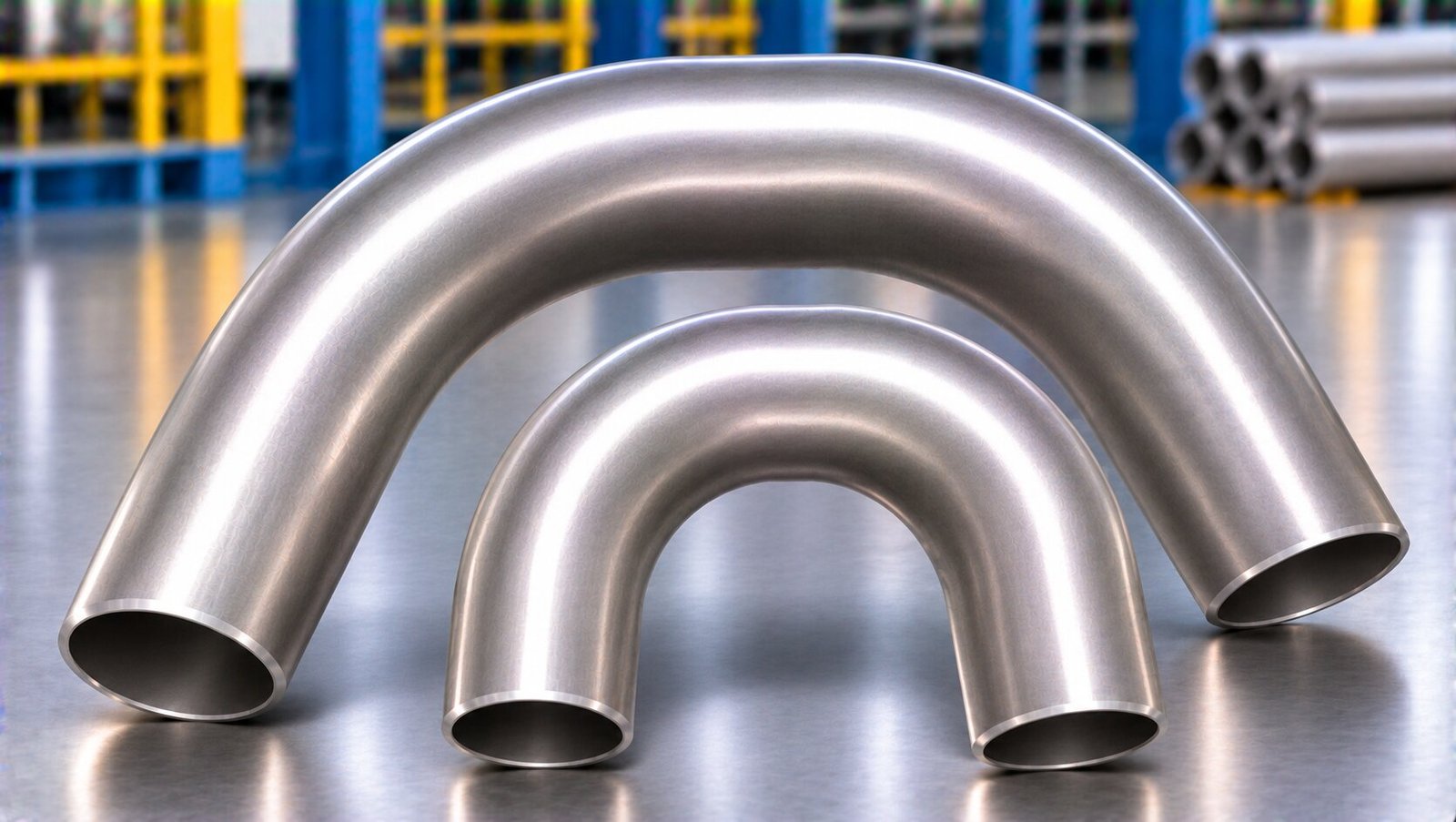
A complete pig-bend specification must define more than pipe size and angle. Pipe size, actual outside diameter, wall thickness and centreline radius affect the finished geometry, while the material and service conditions determine the applicable manufacturing and inspection requirements.
| Bend angle | Drawing-defined angle with the permitted angular tolerance stated in the purchase specification. |
|---|---|
| Pipe size | NPS, DN or actual outside diameter, supported by the applicable pipe dimensional standard. |
| Centreline radius | Project-defined CLR stated as a dimension or approved radius-to-diameter multiple. |
| Wall thickness | Pipe schedule or actual nominal wall, with any required minimum finished wall stated by the purchaser. |
| Pig and bore data | Pig type and envelope, nominal ID, minimum bore, permitted ovality and internal transition requirements. |
| Tangent length | Straight tangent extensions at one or both ends when shown on the bend drawing. |
| End preparation | Plain, square-cut or bevelled ends to the approved welding and fit-up requirement. |
| Surface protection | Bare, painted or project-specified coating system after compatible surface preparation. |
| Proving and inspection | Dimensional, bore, ovality, NDE, gauging or pig-proving requirements defined by the order. |
| Marking | Purchase-order-defined identification such as size, material, heat reference, bend angle and item number. |
Specification note: “pig bend” does not by itself define the finished dimensions. Include the pipe OD, wall, CLR, tangent lengths and dimensional tolerances so Mesta Inc. can manufacture and inspect the bend against measurable requirements.
The centreline radius R and included angle θ establish the curved portion. The theoretical arc length is πRθ/180, the centreline chord is 2R sin(θ/2), and the tangent setback is R tan(θ/2). Straight tangents and manufacturing allowances are added separately.
State the CLR directly or define the accepted D-radius convention. The same nominal pipe size can be supplied with different radii.
Separate the curved arc from any straight tangent extensions. This prevents ambiguity in overall end-to-end dimensions.
Provide reference centre lines, end planes and rotation details when the bend forms part of a spool or three-dimensional route.
Define acceptance limits for angle, radius, end squareness, ovality, wall and end-to-end dimensions in the order.
Calculation note: The formulas above describe ideal centreline geometry only. Manufacturing allowances, end preparation, tangent extensions and project tolerances must come from the approved drawing.
Material selection should match the connected line pipe, design conditions, fluid composition, corrosion allowance, fracture-control requirements and governing specification. Traceability and supplementary testing should be agreed before manufacturing begins.
Carbon steel is widely specified for process, utility, water and pipeline systems. Buyers should state the exact pipe grade, wall and documentation requirement.
Alloy grades may be selected for elevated-temperature or service-specific duties. Heat-treatment and testing requirements must follow the approved specification.
Stainless grades can support corrosion-resistant piping systems. State the precise grade, surface condition, cleanliness and fabrication controls.
When external protection is required, identify the coating system, surface preparation, cutback areas, thickness and inspection criteria.
Material-specific options include carbon steel bends, alloy steel bends, SS 304 bends, SS 316 bends and coated bends.
The suitable forming route depends on the pipe size, wall thickness, material, radius, pig envelope, quantity and specified properties. Mesta Inc. reviews the bend schedule, bore criteria and technical requirements before confirming the manufacturing scope.
Confirm the pig data, minimum bore, bend angle, pipe dimensions, material grade, numeric CLR, tangents, ends and applicable specification.
Resolve centre lines, reference points, overall dimensions and tolerances through the drawing or bend schedule.
Check the specified pipe material and identification against the agreed purchasing and traceability requirements.
Use the approved production route and controls suitable for the material, diameter, wall and required radius.
Cut the bend to the approved tangent or end-to-end dimensions and apply the specified end preparation.
Complete the agreed dimensional, bore, ovality, NDE and proving checks, followed by identification, documentation and packing.
Inspection should confirm that the finished bend matches the approved geometry and remains suitable for connection to the specified piping. The purchase order should identify the governing acceptance criteria and required records.
Verify bend angle, numeric CLR, minimum bore and internal profile against the approved pigging criteria.
The agreed inspection checks wall condition and cross-section geometry at the specified locations.
Check tangents, end ID, weld preparations, internal transitions and orientation for fit-up and pig passage.
Complete the specified gauge, template or pig-proving activity and document the acceptance result.
Pig bends provide gradual direction changes in pipelines intended for cleaning, batching, dewatering, gauging or in-line inspection. Typical project-defined uses include:
Related products include the oil and gas bend, pig pass bend and piggable bend.
Provide enough information to define the material, geometry and acceptance scope without relying on the product name alone:
It is a pipeline bend whose internal geometry is designed and inspected for passage of the specified pig.
No. Piggability depends on the pig envelope, CLR, minimum bore, ovality, internal transitions and other project-specific criteria.
Provide pig type, dimensions, body length, sealing elements, accessories, minimum turning capability and any proving requirements.
State minimum ID, permitted ovality, wall transitions, internal weld profile, CLR and the required gauge, template or pig-proving method.
Mesta Inc. can review enquiries for specified carbon steel, alloy steel and stainless steel grades. Availability and the production route depend on size, wall, radius, quantity and technical requirements.
Yes, subject to technical review and manufacturing feasibility. Send the drawing with pipe dimensions, material, radius, tangents, ends, tolerances, testing and quantity.
Include pig data, line-pipe grade, OD, ID, wall, minimum bore, ovality, angle, CLR, transitions, ends, gauging, NDE, coating and quantity.
Send Mesta Inc. your bend drawing, pipe dimensions, centreline radius, material grade, end details, quantity and inspection requirements. Our team will review the enquiry and confirm the appropriate manufacturing scope.