
Epoxy Layer
The first layer bonds to the prepared steel and provides the primary corrosion-protection interface.
Mesta Inc. supplies 3LPE coated bends for buried and exposed pipeline projects. Each enquiry is reviewed against the bend geometry, steel grade, surface preparation, three-layer coating specification, thickness, end cutbacks, inspection, handling and documentation requirements.
A 3LPE bend is a steel pipe bend protected with a three-layer polyethylene coating system. The typical functional sequence consists of a fusion-bonded epoxy layer on prepared steel, an adhesive or copolymer layer, and an outer polyethylene layer.
The name describes the external corrosion-protection system; it does not define bend angle, centreline radius, pipe size or wall thickness. Those values must be stated independently on the approved bend drawing.
Mesta Inc. reviews the bare bend and coating requirements together so geometry, end cutbacks, coating continuity, inspection access and transport protection are coordinated. Related requirements can be submitted through the coated bend or bend as per drawing pages.
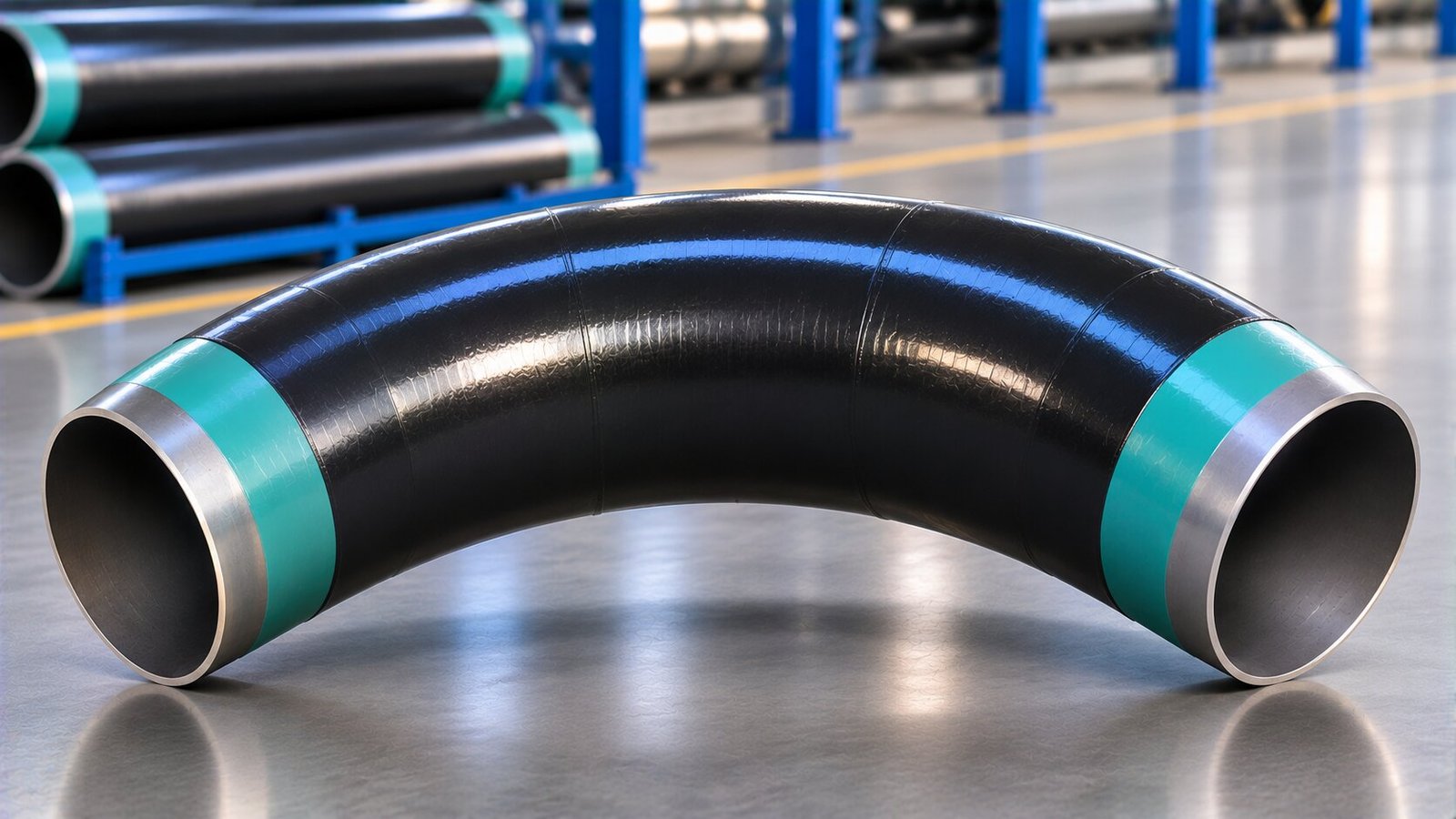
A purchasing specification must define both the steel bend and the complete coating scope. Numeric requirements and acceptance criteria should be stated instead of relying on “3LPE” alone.
| Pipe size | DN, NPS and actual outside diameter supported by the applicable dimensional standard. |
|---|---|
| Bend geometry | Angle, numeric CLR, tangents, end planes and dimensional tolerances from the approved drawing. |
| Steel substrate | Complete material specification, grade, wall, delivery condition and traceability requirement. |
| Bend angle | Project-defined angular change with permitted positive and negative tolerance. |
| Wall thickness | Pipe schedule or nominal wall plus any specified minimum finished-wall requirement. |
| Tangents | Required straight length at the inlet and outlet beyond the theoretical tangent points. |
| Coating system | Specified epoxy, adhesive and polyethylene materials with approved product data and application requirements. |
| End preparation | Plain, square-cut, bevelled, flanged or other drawing-defined connection details. |
| Testing and documents | Dimensional, material and additional agreed inspection records required by the order. |
| Coating details | Surface preparation, layer thicknesses, total thickness, cutbacks, transitions, repairs and holiday testing. |
Terminology note: 3LPE means three-layer polyethylene coating. It is not a radius multiple and does not mean a 3D bend.
The exact materials and application parameters follow the approved project specification. Each layer has a distinct function and must remain compatible with the other layers and the prepared steel surface.
The first layer bonds to the prepared steel and provides the primary corrosion-protection interface.
The intermediate layer promotes adhesion between the epoxy and the outer polyethylene.
The outer layer provides mechanical and environmental protection for the coated bend.
End cutbacks and coating terminations are controlled for welding, field-joint coating and inspection.
Specification note: Layer materials, minimum thicknesses, application temperatures and acceptance tests must come from the approved coating specification and qualified procedure.
The steel bend must satisfy its own material and dimensional requirements before coating begins. Surface condition and preparation directly affect coating adhesion and continuity.
Verify the complete steel specification, grade, heat identity and required material certificates.
Confirm OD, wall, angle, CLR, tangents, ends and dimensional acceptance before coating.
Define cleaning, abrasive preparation, profile and contamination controls in the coating specification.
Check the steel surface, ends, markings and areas requiring masking or controlled cutbacks.
Related pages include carbon steel bends, coated bends and oil and gas bends.
The approved procedure must suit the bend geometry, coating materials and project specification. A controlled workflow protects traceability and separates surface, application, inspection and repair stages.
Confirm layer materials, thicknesses, cutbacks, inspection points, repairs and documentation.
Verify material identity, dimensions, surface condition and areas requiring masking.
Clean and prepare the bend to the specified condition and surface-profile requirements.
Apply the epoxy, adhesive and polyethylene layers using the approved sequence and controls.
Complete specified visual, thickness, continuity and other acceptance checks; repair only by the approved method.
Mark, document, support and pack the coated bend to prevent damage during storage and transport.
The inspection plan should identify the applicable methods, measurement locations, acceptance criteria, witness points and required records.
Check coating continuity, appearance, transitions, cutbacks, repairs and visible damage.
Measure at the specified locations and record results against the approved requirements.
Perform electrical continuity testing when specified, using the agreed method and acceptance criteria.
Complete any specified adhesion, impact, indentation or project-specific testing and reporting.
3LPE coating is commonly specified where the bend requires external corrosion protection and mechanical protection compatible with the connected coated pipeline. Project-specific uses include:
The designer must confirm service suitability, coating compatibility, installation method and field-joint coating requirements.
Provide the bend and coating scope together so Mesta Inc. can review technical and commercial requirements:
3LPE means a three-layer polyethylene coating system consisting of an epoxy layer, an adhesive layer and an outer polyethylene layer.
No. 3LPE defines the coating system. Bend angle, centreline radius, pipe size, wall, tangents and ends must be specified separately.
The approved project specification should state minimum individual-layer or total thickness requirements, measurement locations and acceptance criteria.
Cutbacks leave controlled bare-end areas for welding, inspection and field-joint coating. Their lengths and transitions must be defined in the drawing or coating specification.
Yes. State the test method, equipment settings, coverage, acceptance criteria and repair requirements in the order.
Use suitable padded supports, lifting methods and packing that avoid abrasion, indentation, impact and damage to coating transitions or cutbacks.
Send the bend drawing, steel grade, OD, wall, angle, CLR, coating specification, layer thicknesses, cutbacks, testing, documents, quantity and delivery requirements.
Send Mesta Inc. your bend drawing, steel specification, coating system, layer thicknesses, cutbacks, inspection plan, quantity, packing and delivery requirements.