
Forty-Five-Degree Deflection
The outlet centre line is rotated 45° from the inlet centre line in the drawing-defined bend plane.
Mesta Inc. supplies 45 deg pulled bends for controlled directional changes in process piping, pipelines and fabricated pipe assemblies. Buyers can define pipe size, long-radius geometry, material, wall, tangents, ends and inspection scope through a bend schedule or approved drawing.
A 45 deg pulled bend turns the pipe centre line through forty-five degrees using a controlled pulling or drawing-based forming route suited to the approved pipe and tooling combination.
The product name does not define the finished component by itself. The purchaser must state the pipe OD, starting wall, material, centreline radius, tangent lengths, end details and permitted angle, wall and ovality tolerances.
Mesta Inc. reviews the combined geometry, material behaviour and acceptance requirements before confirming feasibility. Include bend-plane orientation and end references when the bend forms part of a controlled spool. See the broader pulled bend range.
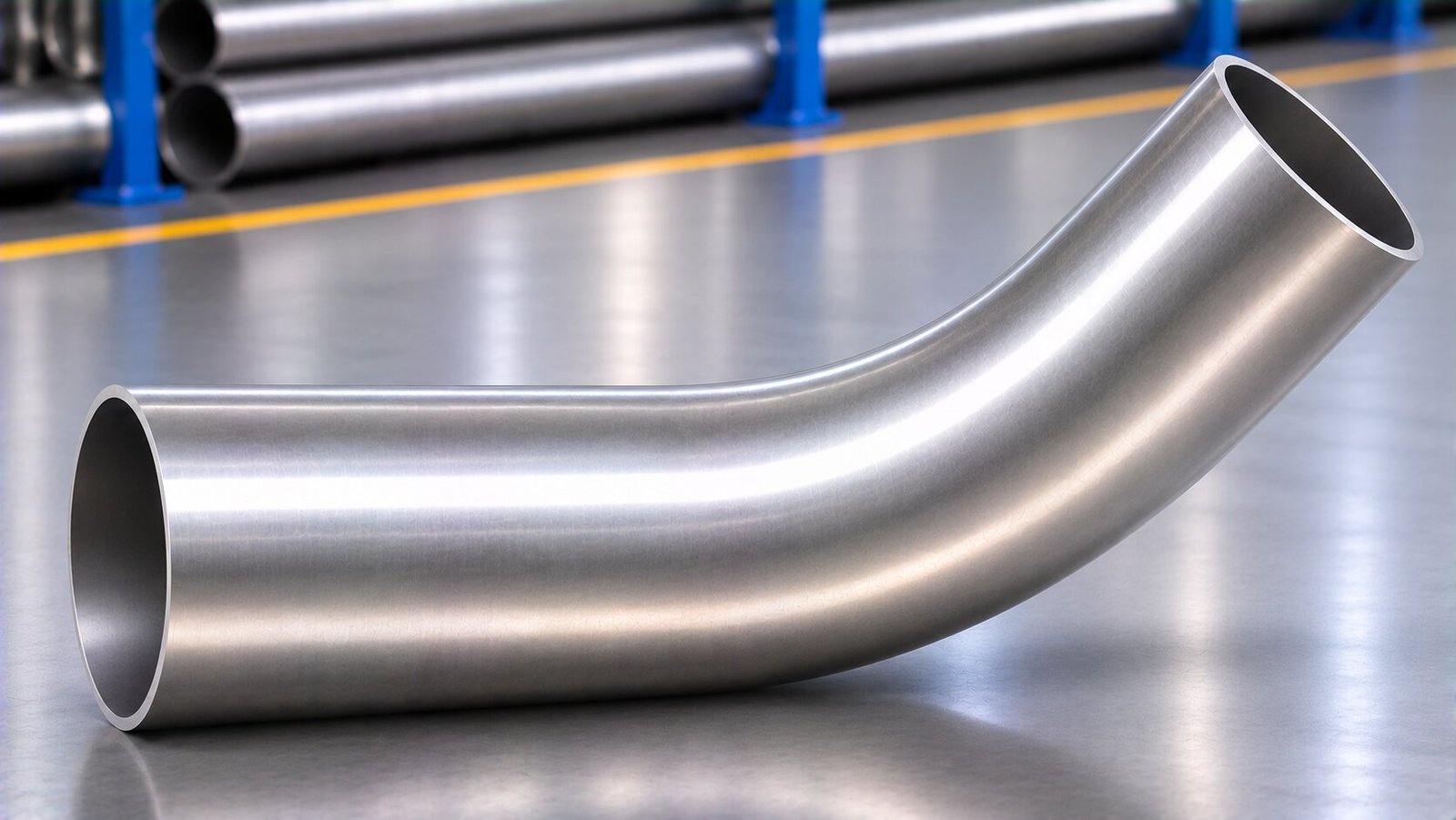
An actionable purchase description combines the 45° angle with the pipe and bend data. Using one bend-schedule line for each configuration helps distinguish items that share a nominal size but have different walls, radii, tangents or materials.
| Item identification | Line number, item number, drawing reference and quantity for clear schedule control. |
|---|---|
| Nominal size and OD | DN or NPS together with the applicable dimensional standard and confirmed outside diameter. |
| Nominal wall | Schedule or millimetre wall, plus any project-defined minimum wall after bending. |
| Bend angle | 45 degrees with the permitted positive and negative angular deviation. |
| LR / centreline radius | Exact CLR in millimetres or the approved diameter multiple with its calculation basis. |
| Tangents | Required straight length at each end, measured from the theoretical tangent points. |
| Material specification | Full material standard and grade rather than a generic description such as steel or stainless steel. |
| End condition | Cut length, squareness, bevel angle, root face and protection as applicable to the connection. |
| Inspection package | Required material certificates, dimensional report, examination records and release documents. |
| Delivery condition | Heat treatment, surface condition, coating, marking, packing and destination requirements. |
Ordering note: Avoid specifying only “45 deg pulled bend.” Two bends with the same angle and nominal size can have different centreline radii, tangents and overall dimensions. Attach the controlled drawing or completed bend schedule to the enquiry.
The configuration begins at the first tangent point, follows the curved centre line through 45° and ends at the second tangent point. The drawing must separate the curved portion from any straight tangents and identify the required measurement references.
The outlet centre line is rotated 45° from the inlet centre line in the drawing-defined bend plane.
The stated CLR controls the curved path; the theoretical centreline arc length equals πR/4.
State the starting wall and any minimum finished-wall requirement at agreed bend locations.
Define permitted cross-section change, tangent lengths, end squareness and connection preparation.
Layout note: Mark the flow direction, bend plane, rotation and item number so fabrication and installation teams can maintain the intended 45° orientation.
Material selection should match the connected pipe, design temperature, design pressure, corrosion allowance, fluid service and governing project specification. Traceability and supplementary testing should be agreed before manufacturing begins.
Carbon steel is widely specified for process, utility, water and pipeline systems. Buyers should state the exact pipe grade, wall and documentation requirement.
Alloy grades may be selected for elevated-temperature or service-specific duties. Heat-treatment and testing requirements must follow the approved specification.
Stainless grades can support corrosion-resistant piping systems. State the precise grade, surface condition, cleanliness and fabrication controls.
When external protection is required, identify the coating system, surface preparation, cutback areas, thickness and inspection criteria.
Material-specific options include carbon steel bends, alloy steel bends, SS 304 bends, SS 316 bends and coated bends.
A controlled enquiry-to-release process helps keep commercial and technical requirements aligned. Mesta Inc. uses the submitted specifications to evaluate feasibility and establish the agreed supply scope.
List every required size, wall, material, CLR, tangent, end detail and quantity with the latest drawing revision.
Clarify missing dimensions, tolerances, material requirements, inspection points and delivery conditions.
Align the quotation with the accepted manufacturing, testing, documentation, coating and packing requirements.
Use approved item numbers and drawing references to maintain identification through production and inspection.
Check the required dimensional and examination records against the purchase-order acceptance criteria.
Apply agreed identification and end protection, then pack the bends for the stated mode and destination.
Inspection should address the formed geometry and cross-section as well as material identity and end condition. Acceptance criteria must come from the purchase order, approved drawing and project specification.
Define the certificate type and traceability information required to connect the supplied bend with its source material.
The report can record angle, CLR, tangents, end dimensions, wall readings, ovality and other agreed checkpoints.
When additional examination is specified, identify the method, coverage, procedure, acceptance standard and reporting format.
Agree the document index, marking details, coating records and inspection release requirements before dispatch.
The 45° deflection supports layouts requiring a deliberate but moderate alignment change. The engineering designer must confirm that the radius, material and wall suit the service. Common purchasing contexts include:
Related configurations include pulled bends, flanged-end bends and bends for hydro test.
Send one consolidated technical and commercial package so the quotation can address the complete requirement:
It is a pipe bend formed through a controlled pulling or drawing-based route to achieve a drawing-defined 45° change in direction.
State actual OD, starting wall, 45° angle, numeric CLR, tangent lengths, ends, overall references and permitted tolerances.
Forming can change wall distribution and pipe cross-section. The order should define measurement locations, methods and acceptance limits.
Yes, when included in the agreed scope. Define the bevel geometry, end squareness, tangent length and applicable welding-preparation requirement.
Provide the complete material specification and grade, OD, starting wall, delivery condition, required certificates and supplementary requirements.
Yes, subject to review. Each line should identify pipe data, material, angle, CLR, tangents, ends, tolerances, quantity and drawing reference.
State required material certificates, dimensional, wall and ovality reports, examination records, heat-treatment or coating records and release documents.
Send Mesta Inc. your bend schedule, drawings, pipe specification, centreline radius, tangents, end preparation, quantities and document requirements for technical and commercial review.